




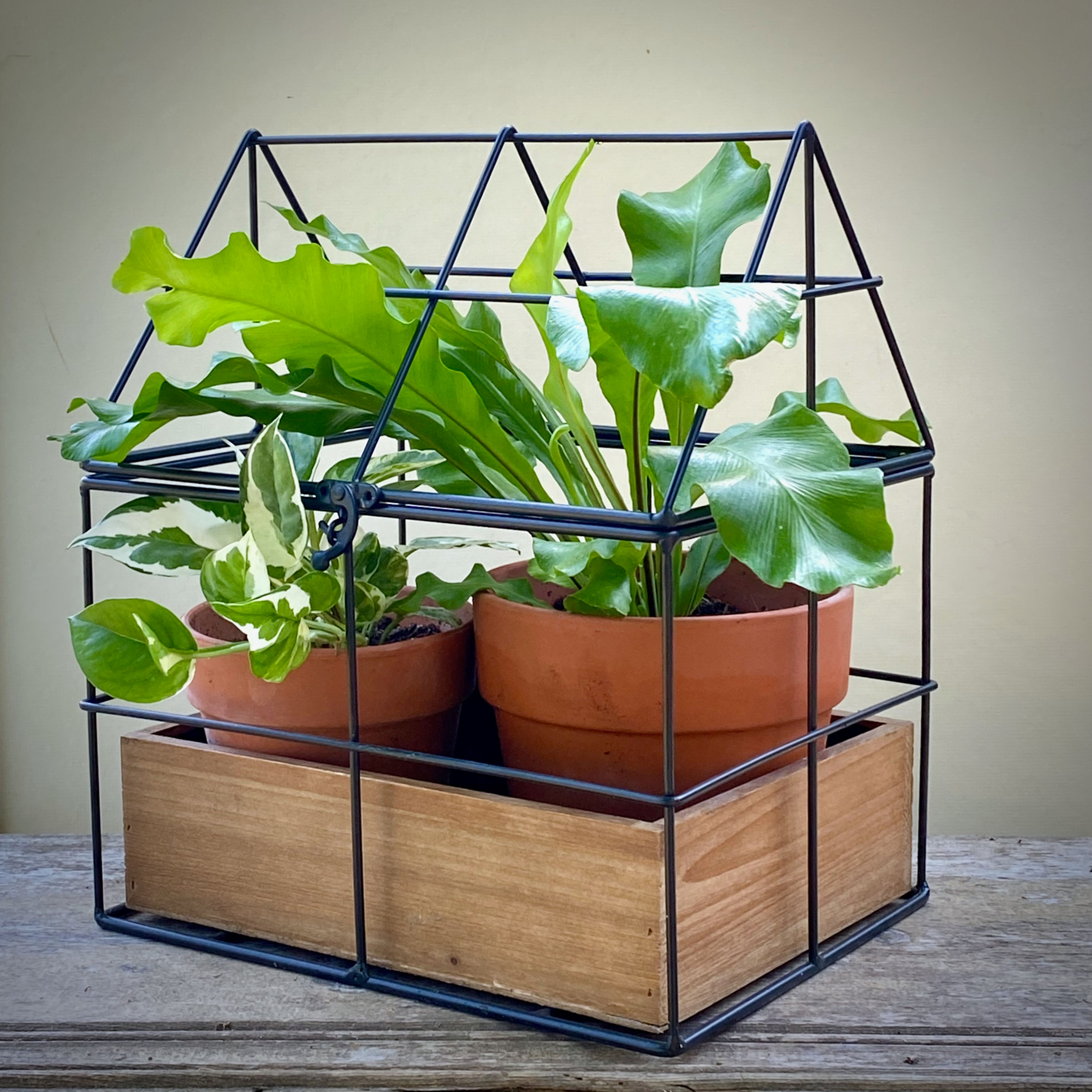

Bird's Nest Fern and Pothos N'Joy
terracotta standard pots
8.5" x 10.5" wire terrarium with wood tray
Wire Terrarium with Terracotta Pots
Pothos N'Joy Care
LIGHT: Your N Joy Pothos grows best in medium and high light areas but will tolerate low light. The variegation will be more pronounced in higher light. Direct sunlight will burn the foliage.
WATER: Water your Pothos when the top 75% of soil is dry. Don’t worry if you forget—it will tolerate an occasional missed watering! Look out for yellow leaves, they are a symptom of too much water.
HUMIDITY: This plant will do well in low humidity environments but will thrive with a bit more humidity. Mist often. Brown leaf tips may indicate the air is too dry.
TEMPERATURE: Your N Joy Pothos prefers average to warm temperatures, 65-85 degrees.
FERTILIZER: Fertilize once a month with an all-purpose fertilizer for houseplants.
TOXICITY: Your Pothos is mildly toxic to pets and humans. Typically, ingestion will cause mouth and stomach irritation and possible vomiting.
ADDITIONAL CARE: Trim out any dead, discolored, damaged, or diseased leaves and stems as they occur. Use clean, sharp scissors to avoid tearing or bruising the stems. Snip stems just above a leaf node – new growth will emerge from this cut.
Bird's Nest Fern
LIGHT: Your Bird’s Nest Fern will do best in medium to low light. The more light it receives, the more the leaves will crinkle and the less light, the flatter the leaves will be. Keep in mind, too much light or extended periods of direct sunlight will cause the fronds on the fern to get a pale bleached color.
WATER: Water when the top 25% of the soil is dry. When watering, water only the soil – not the leaves. Water accumulating in the crown of your plant could lead to bacterial growth and potential leaf rot. Water until liquid flows through the drainage hole at the bottom of the pot and discard any water that has accumulated in the saucer.
HUMIDITY: This plant likes a humid environment, like a bathroom or kitchen. Mist often.
TEMPERATURE: This fern will enjoy a warm area, preferably between 68-80 degrees, so maintain indoor temperatures above 60 degrees. Avoid cold drafts and sudden temperature changes.
FERTILIZER: Feed once a month during the spring and summer with a liquid fertilizer for indoor plants.
TOXICITY: Bird’s Nest Ferns are non-poisonous plants and safe for humans, dogs and cats.
ADDITIONAL CARE: Regularly remove any dead fronds from the plant to encourage healthy new growth. Cut stems at the soil line with clean, sharp shears.